Why Teak Wood Utensils for my kitchen ?
Our Materials: Nature’s Most Resilient Timber
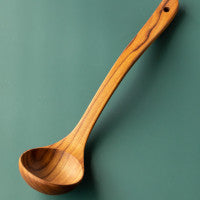
At Yompai, the choice of material is as intentional as the design. We focus on Tectona grandis—commonly known as Teak—not just for its aesthetic appeal, but for its unparalleled performance in a culinary environment.
Where is Teak from
Teak is unique among hardwoods due to its high natural oil content and tight wood grain. These biological features provide several functional benefits:
- Natural Water Resistance: The rubber and oil content within the wood fibers acts as a built-in water repellent. This prevents the wood from absorbing moisture, which is the primary cause of warping and cracking in lesser wooden tools.
- Antimicrobial Properties: Because teak resists moisture absorption, it is less likely to harbor bacteria or food particles within the grain, making it a more hygienic choice for food preparation.
- Knife-Friendly Surface: While teak is incredibly durable, it possesses a structural "give" that is gentle on your knife edges. Unlike glass or stone boards, teak helps maintain the sharpness of your cutlery over time.
- Aging Gracefully: Unlike plastic alternatives that degrade and scar, teak develops a rich patina over time. With minimal care, these pieces transition from kitchen tools to functional heirlooms.
The Science of Teak: Why it Excels in the Kitchen
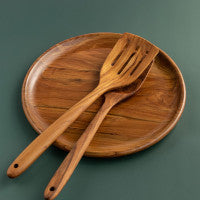
Teak wood has a very high oil content, giving it a very high decay resistance. It is incredibly durable and is water resistant. It does not crack or turn black when in contact with metals and it is resistant to termites and other pests. For these reasons it is used in a wide variety of ways, boat building, yachts, exterior construction, indoor and outdoor furniture, veneers and carvings. And of course kitchen utensils.
Sustainability & Ethical Forestry
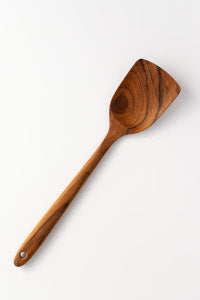
We are committed to ensuring that our artistry does not come at the cost of the environment. Our teak is sourced from sustainably managed plantations in Thailand, adhering to strict environmental standards.
- Regenerative Harvesting: We source from areas where trees are replanted systematically, ensuring a continuous cycle of growth and carbon sequestration.
- Zero-Waste Craftsmanship: Because our artisans work by hand in small village workshops, they utilize the "natural flow" of the timber. Smaller off-cuts that might be discarded in industrial factories are transformed into our salt spoons and small condiment bowls.
- Non-Toxic Finishing: To preserve the purity of the wood, we use food-safe, non-toxic finishes. This ensures that no chemicals leach into your food, keeping your kitchen as natural as the forest itself.
Caring for Your Teak
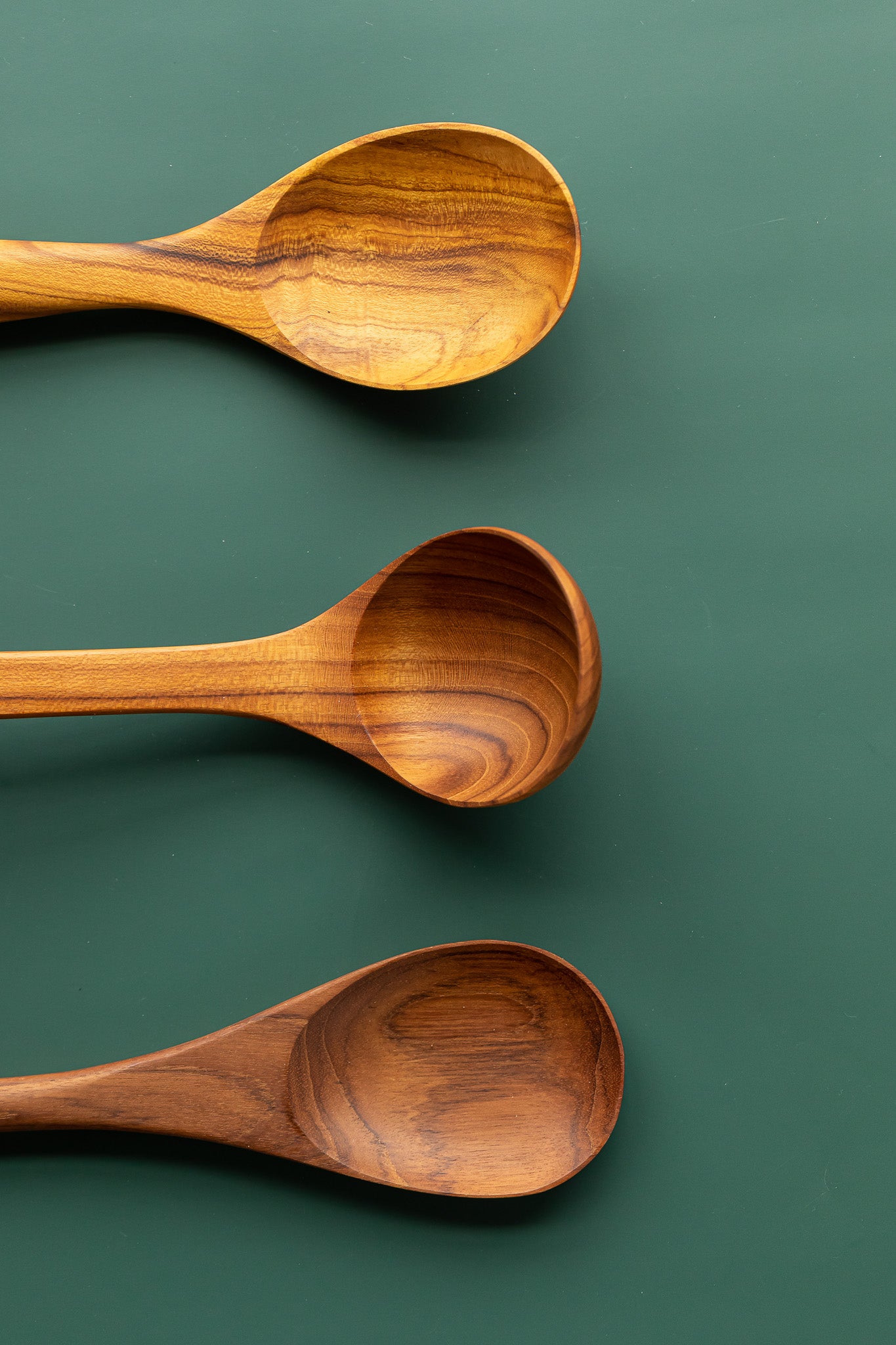
To maintain the luster and longevity of your Yompai pieces, we recommend a simple care routine:
- Hand wash only with mild soap and warm water.
- Avoid the dishwasher, as high heat and harsh detergents can strip the natural oils.
- Apply a food-grade mineral oil or beeswax cream occasionally to "feed" the wood and restore its deep, golden glow.